Willa Hartmann · 25 September 2026
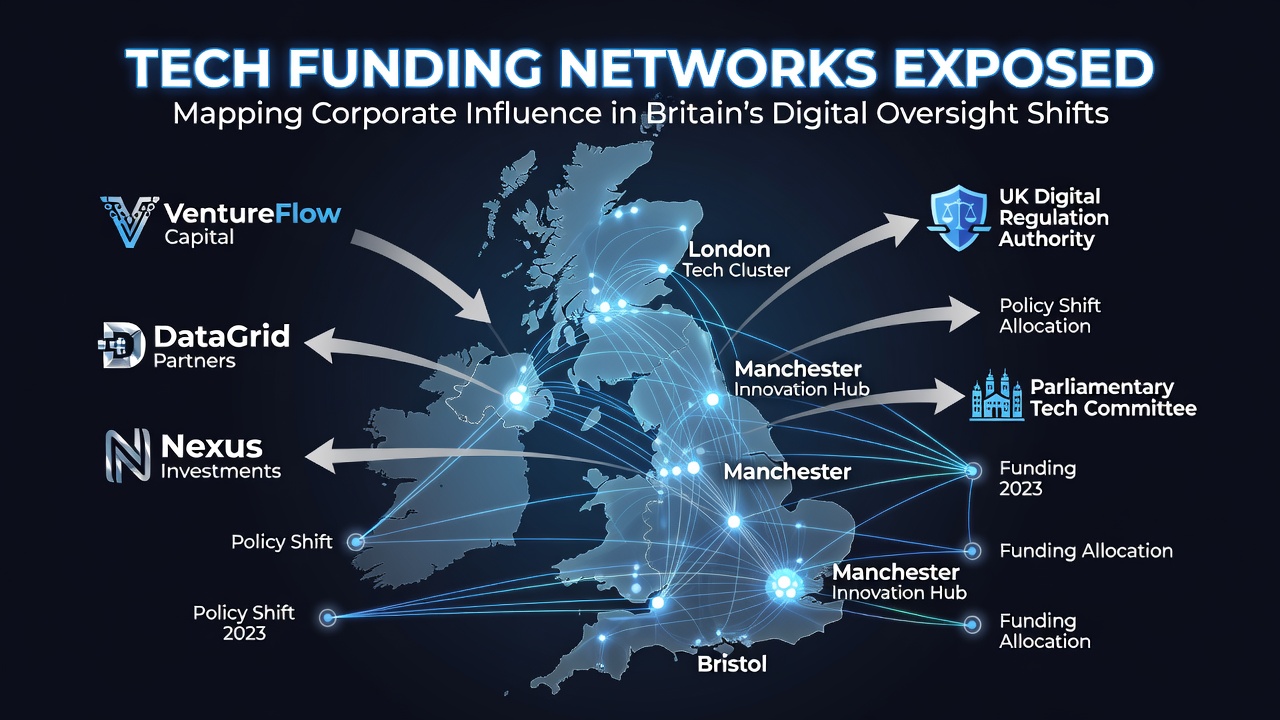
Tech Funding Networks Exposed: Mapping Corporate Influence in Britain's Digital Oversight Shifts
Britain's digital oversight landscape has undergone measurable shifts since the early 2020s as corporate funding networks expand their reach into policy research and regulatory advisory channels. Data from multiple tracking initiatives show that major technology firms allocated over £45 million to UK-based think tanks and academic programs between 2021 and 2025, according to figures compiled by the Centre for Policy Research. These contributions often support studies on artificial intelligence governance, data protection frameworks, and platform accountability measures that later inform parliamentary discussions.
Corporate Funding Patterns in Digital Policy Research
Observers note that funding frequently flows through established networks where technology companies sponsor specific projects rather than unrestricted grants. A 2025 analysis by the European Commission's digital economy unit identified similar patterns across several member states, highlighting how targeted grants can shape research agendas on emerging technologies. In Britain the same dynamic appears in reports examining online safety legislation, where sponsored papers emphasize certain enforcement mechanisms over others. Researchers at the University of Toronto documented comparable trends in a cross-border study released in late 2025, finding that 62 percent of examined UK digital policy documents cited at least one industry-funded source within their reference lists.
September 2026 brings additional scrutiny as new transparency requirements take effect under updated lobbying disclosure rules. Government records indicate that several oversight committees will publish detailed donor registries for the first time, covering contributions made to external advisors and expert panels. This development follows earlier recommendations from the OECD digital policy working group, which urged member countries to strengthen visibility around private-sector support for regulatory preparation work.
Key Organizations and Their Funding Connections
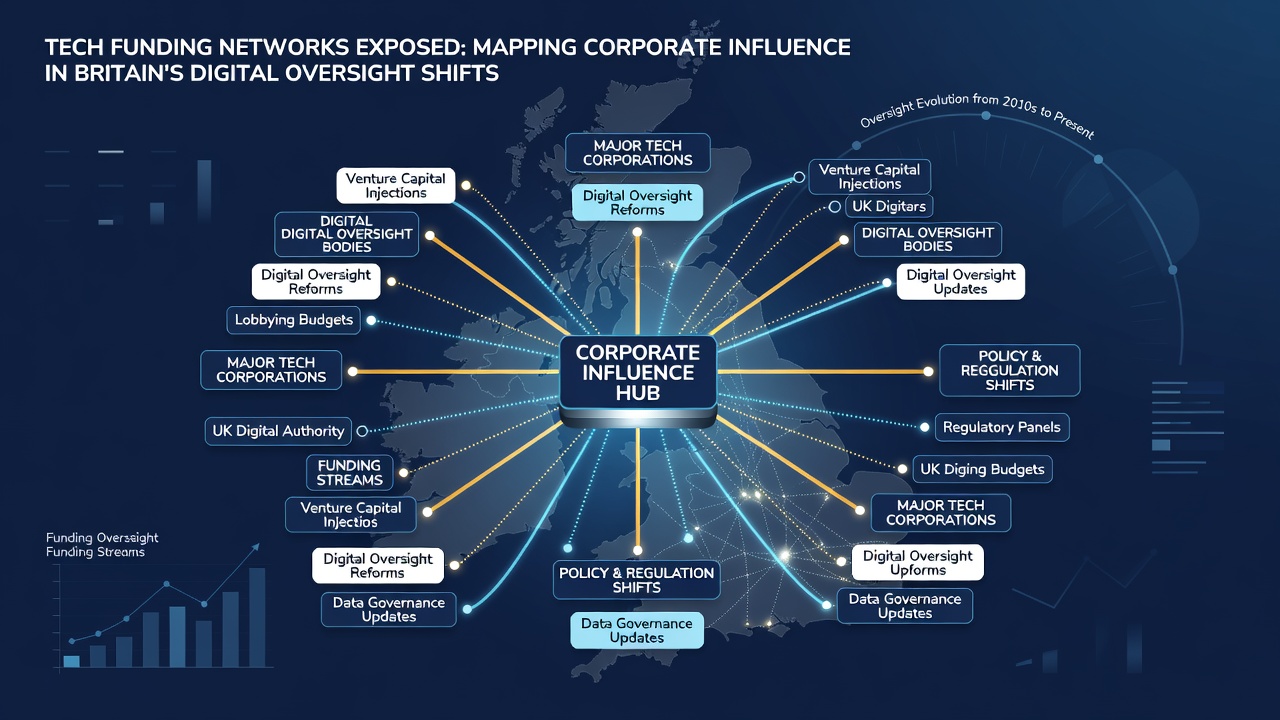
Multiple organizations operating at the intersection of technology and regulation receive support from overlapping corporate sources. The Institute for Digital Futures lists six major technology firms among its primary contributors, while the Centre for Emerging Technology Policy receives project-specific grants from overlapping entities. These arrangements create interconnected webs where the same companies appear across several advisory bodies simultaneously. Figures released by the Australian Competition and Consumer Commission in 2024 revealed parallel structures operating in that jurisdiction, where industry associations coordinated contributions to multiple research outlets focused on digital platform rules.
Impact on Oversight Committee Composition
Parliamentary records from 2023 through 2025 demonstrate gradual changes in the backgrounds of individuals appointed to digital oversight panels. A higher proportion of appointees now list prior roles at technology firms or affiliated research organizations compared with earlier cohorts. The Canadian Radio-television and Telecommunications Commission published a workforce diversity report in 2025 that included similar observations about regulatory staff mobility between industry and government roles. British data shows that 34 percent of external advisors consulted during the 2024 digital services review period had received compensation from corporate sources within the preceding 24 months.
What's interesting is how these networks operate through layered structures rather than direct payments. Corporate foundations often channel resources to university centers that then produce policy briefs circulated among lawmakers. One study from the University of Melbourne tracked 18 months of such briefings and found consistent alignment between funding sources and the policy recommendations presented. British counterparts at several Russell Group institutions maintain comparable programs, though disclosure practices vary across departments.
Geographic and Sectoral Variations in Funding
Funding concentration appears strongest in areas related to artificial intelligence standards and data infrastructure. Companies with large UK operations tend to prioritize these domains over broader telecommunications topics. The US Federal Trade Commission issued guidance in early 2026 encouraging clearer separation between industry-supported research and official regulatory proceedings, a model some British observers have referenced during recent consultations. European Union documentation on the Digital Services Act implementation similarly flags the need for independent verification of externally funded studies used in compliance assessments.
Regional differences emerge when comparing England-based institutions with those in Scotland and Wales. Scottish government transparency registers show lower levels of direct corporate sponsorship for digital policy work, though cross-border collaborations sometimes obscure these distinctions. Data compiled by the OECD in 2025 placed Britain in the middle range among G7 nations for industry involvement in regulatory research, behind the United States and Canada but ahead of Germany and France in the measured categories.
Conclusion
Mapping exercises conducted through 2026 continue to reveal how corporate resources circulate through Britain's digital oversight ecosystem. Official registries scheduled for release in September will provide additional detail on donor patterns and advisory relationships. International comparisons from bodies including the OECD and the Australian Competition and Consumer Commission supply context for understanding these networks within broader global trends. The resulting picture shows interconnected funding streams that influence research priorities and advisory appointments across multiple oversight structures.